The “Forest View” (TL;DR)
- The performance gap between open-source and premium frontier models has narrowed to single-digit percentage points on everyday tasks, while inference costs run 4–10× cheaper.
- DeepSeek V4 Pro leads for agentic coding, Qwen3.6-27B is the best compact coder under Apache 2.0, and Llama 4 Scout owns ultra-long context at 10 million tokens.
- Ollama remains the easiest entry point—one command pulls and runs models locally—while 16GB of system RAM is the practical floor for running 7B parameter models.
Forty-four percent of organizations cite data privacy as their top concern when adopting large language models. That concern now has a clear answer: the open-source LLM landscape has matured dramatically, and those organizations have no reason to hold back. Between April and May 2026 alone, Moonshot, Z.ai, DeepSeek, and Xiaomi each shipped major model updates. The open-weights frontier moves monthly, and the answer to “what’s the best open-source LLM in 2026?” is no longer the model that was best in March.
Self-hosting is no longer a niche engineering exercise. It is a financial and strategic decision—one that increasingly makes sense for startups, enterprises, and individual developers alike.
Why Self-Hosting Matters Right Now
Data sovereignty is the most immediate driver. You cannot send customer emails, medical records, legal drafts, or internal Slack archives to a cloud endpoint if you have a GDPR-sensitive workload. You also cannot burn thousands of dollars a month on token bills when you’re bootstrapping.
Cost elimination is the second. Self-hosting eliminates per-token API costs entirely, which can save significant money at scale. Cloud API costs continue to climb for teams running high-volume inference.
Performance parity is now real. Models like DeepSeek R1, Llama 4 Maverick, and Qwen now match or exceed GPT-4 on many benchmarks including coding, math, and reasoning tasks.
The Top Open-Source LLMs to Self-Host in 2026
1. Meta Llama 4 (Scout & Maverick)
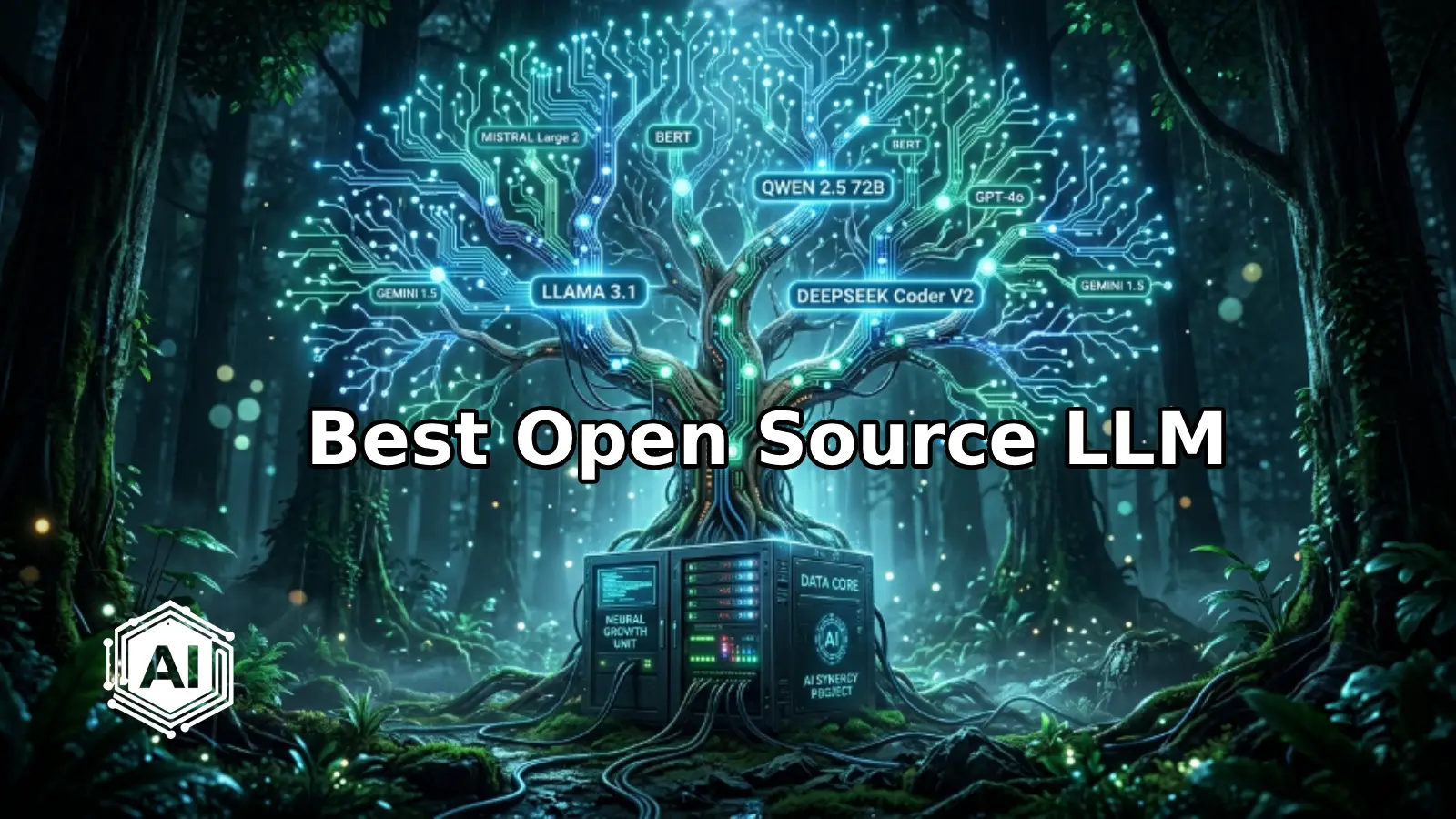
Llama 4 remains the community’s backbone. Llama 4 Scout is unmatched for long-context work, supporting up to 10 million tokens, while Maverick holds the highest MMLU score (85.5%) among open models for general-purpose chat. Nearly every major inference tool—Ollama, vLLM, LM Studio—prioritizes Llama compatibility first.
Best for: General-purpose deployment, long-document processing, community tooling.
2. DeepSeek V4 Pro
DeepSeek is the model to beat for technical workloads. DeepSeek V4 Pro ranks first on the Artificial Analysis Index (score: 52) and is the top agentic model among all open-weight models. DeepSeek V3.2-Speciale also won gold at IMO, IOI, and ICPC 2026—if you need multi-step mathematical reasoning, this family leads clearly.
License: MIT. Best for: Agentic coding, math, structured reasoning.
3. Alibaba Qwen 3.5 / Qwen3.6
Qwen is the most versatile open-weights family available. The flagship Qwen3.5-397B-A17B combines a large Mixture-of-Experts architecture with multimodal reasoning and ultra-long context, delivering 8.6×–19× higher decoding throughput versus the prior generation for large-scale serving. The compact Qwen3.6-27B is a powerhouse for resource-constrained environments. Qwen 3.5 supports over 201 languages, making it the top choice for multilingual deployments.
License: Apache 2.0. Best for: Coding, multilingual tasks, agentic workflows.
4. Mistral Large 3 / Small 4
Mistral’s licensing story improved significantly this cycle. Both Mistral Large 3 and Mistral Small 4 now ship under Apache 2.0—a significant shift from earlier restrictive licensing—with no usage caps, royalties, or geographic restrictions. Mistral Small 4 bundles Devstral’s agentic coding capabilities in a 6B active parameter package.
Best for: European compliance workloads, multilingual use, lightweight agentic coding.
5. Microsoft Phi-4
For teams with limited hardware, Phi-4 punches well above its weight class. With limited VRAM (8GB), Phi-4 14B or Llama 3.1 8B are the recommended starting points for practical self-hosted inference. Phi-4 trades sheer scale for efficiency, making it ideal for on-device and edge deployments.
Best for: Low-VRAM setups, on-device inference, rapid prototyping.
Model Comparison Table
| Model | Best Use Case | License | Context Window | VRAM (Min) |
|---|---|---|---|---|
| Llama 4 Scout | Long context, general chat | Llama 4 Community | 10M tokens | 40GB+ |
| DeepSeek V4 Pro | Agentic coding, math | MIT | 128K tokens | 80GB+ (enterprise) |
| Qwen3.6-27B | Coding, multilingual | Apache 2.0 | 128K tokens | 24GB |
| Mistral Small 4 | Compliance, compact agentic | Apache 2.0 | 256K tokens | 16GB |
| Microsoft Phi-4 | Edge/on-device, low VRAM | MIT | 16K tokens | 8GB |
How to Self-Host: Tools & Setup Basics
Ollama (Recommended for Beginners)
Ollama is the “Docker for LLMs”—one command pulls and runs models locally. It bundles llama.cpp under the hood, handles quantization automatically, and exposes an OpenAI-compatible API without manual configuration. It supports macOS, Linux, and Windows with automatic hardware detection.
Getting started takes under five minutes:
bash
# Install Ollama, then pull a model
ollama pull qwen3:8b

# Run it
ollama run qwen3:8b
Running local LLMs has shifted from a hobbyist pursuit to a practical engineering decision. Once running, you point your app or IDE extension at localhost:11434—the same OpenAI-compatible endpoint format.
Docker + Open WebUI (Recommended for Teams)
Open WebUI provides a full-featured chat interface that looks and feels like ChatGPT but runs entirely locally, supporting multiple models, conversation history, file uploads, and user management—giving your entire team browser-based access without installing anything on individual machines.
Running Ollama and Open WebUI as Docker containers keeps your host system clean, and makes updates, restarts, and troubleshooting significantly easier.
Hardware Reality Check
The most important thing to understand is this: VRAM is the bottleneck, not compute. A model running on a five-year-old RTX 3060 at Q4 quantization will give you 90% of the quality of the same model on an H100—just slower.
Practical tiers:
- 8GB VRAM / 16GB RAM: Phi-4, Llama 3.1 8B, Gemma 2 9B
- 24GB VRAM: Qwen3.6-27B, Mistral Small 4, Llama 3.3 70B (quantized)
- 80GB+ VRAM (enterprise GPU): DeepSeek V4 Pro, Kimi K2.6, GLM-5.1
In 2026, you can run a capable 7B-parameter language model on a CPU-only VPS for around €50/month, with full data ownership, a stable HTTP API, and zero rate limits—though it won’t replace frontier-class models for deep reasoning.
Which Model Should You Pick?
The practical decision matrix is straightforward: need reasoning or math, choose DeepSeek R1; need vision or multimodal, choose Llama 4 Maverick; need coding, choose Qwen; need speed on limited VRAM, choose Phi-4 or Llama 3.1 8B; need enterprise-scale deployment, choose Qwen 3 72B or Mistral Large.
For most developers, the practical starting point is Qwen3.6-27B or Devstral Small 2 on local hardware, then scaling to Kimi K2.6, GLM-5.1, or DeepSeek V4 Pro when top-tier agentic performance and enterprise GPUs are available.
The Human Root: Jobs, Ethics, and Ownership
Self-hosted AI shifts power. When a company runs its own LLM, it controls training data, output filtering, and bias correction in ways that API consumers simply cannot. That matters enormously for regulated industries—healthcare, law, finance—where auditability of AI decisions is not optional.
For developers, the rise of capable open-weight models creates a genuine career fork. Those who can deploy, fine-tune, and operationalize local LLMs are increasingly valuable. Those who only know how to call openai.ChatCompletion.create() face narrowing leverage.
There is also an equity dimension worth naming. Open-weight AI allows researchers and developers outside Silicon Valley—in Lahore, Lagos, Kraków—to build on frontier-class models without cloud pricing that assumes a US dollar income. That redistribution of capability is not trivial.
The ethical risk is the mirror of the benefit. Without a cloud provider’s content filters, a self-hosted LLM can be configured without guardrails. The responsibility for responsible deployment moves entirely to the operator. That is a feature and a liability simultaneously.
The Verdict
The realistic 2026 outcome is a mixed ecosystem where open-source handles a growing share of routine work. The models are genuinely good. The tooling—Ollama, vLLM, Open WebUI—is genuinely accessible. The licensing, especially Apache 2.0 and MIT across DeepSeek, Qwen, Mistral, and GLM-5, is genuinely permissive.
The window where “self-hosting an LLM” required a specialist team and a six-figure hardware budget has closed. What remains is a choice about priorities: data control, cost discipline, and technical ownership versus the convenience of a managed API. In 2026, both options are legitimate. The question is which trade-offs match your workload.
Pick your model. Run the ollama pull command. Then benchmark against your actual data—not someone else’s leaderboard.
FAQs
Ollama is the simplest entry point. It bundles everything needed to run open-weight models locally, handles quantization automatically, and exposes an OpenAI-compatible API with a single terminal command. For teams wanting a browser interface, pairing Ollama with Open WebUI via Docker adds minimal complexity.
A dedicated GPU improves response speed significantly, but it is optional for getting started. Ollama can run on CPU-only systems and will use available hardware acceleration when present. For practical performance on CPU-only hardware, models under 8B parameters are the recommended starting point.
Yes—the performance gap has narrowed significantly. Models like DeepSeek R1, Llama 4 Maverick, and Qwen now match or exceed GPT-4 on many benchmarks including coding, math, and reasoning tasks. For specialized or long-context workloads, some proprietary models still lead, but the gap is shrinking with each monthly release cycle.