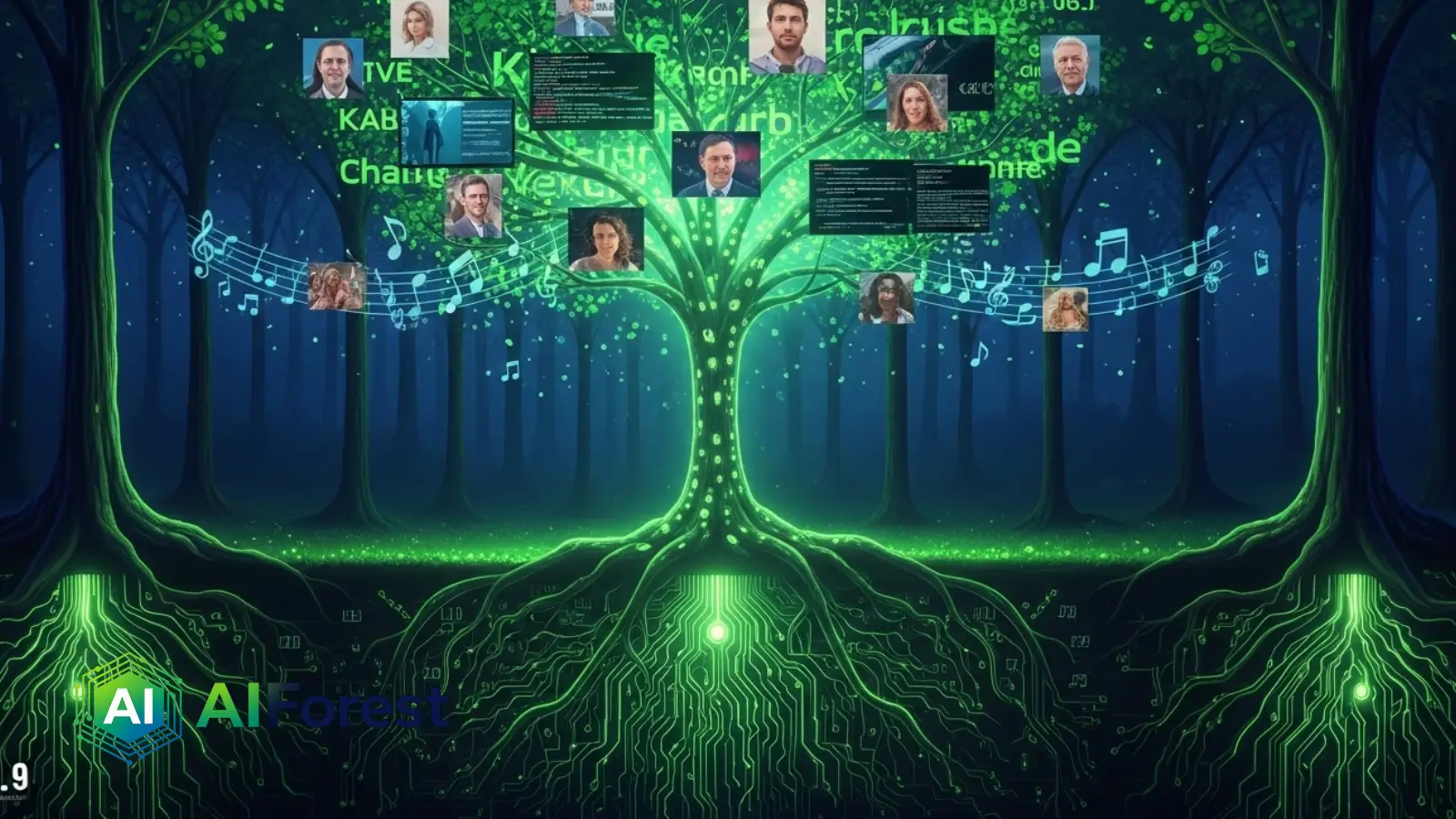
The Forest View — TL;DR
- Generative AI creates new content — text, images, audio, video, and code — by learning statistical patterns from vast training datasets, then producing novel outputs on demand.
- It is already embedded in daily work: customer support, software engineering, drug discovery, legal drafting, and content production all use generative AI at scale in 2026.
- The stakes are real: generative AI is projected to add $4.4 trillion annually to the global economy (McKinsey, 2025 update), while simultaneously raising serious questions about authorship, accuracy, and labor.
Why Generative AI Matters More in 2026 Than It Did in 2023
Three years ago, generative AI was a novelty — something to experiment with on a Friday afternoon. Today, over 78% of Fortune 500 companies have deployed at least one generative AI application in production, according to Gartner’s 2026 CIO Survey. The technology moved from prototype to payroll in record time.
What shifted? Training data scaled dramatically. Inference costs dropped by roughly 90% between 2023 and 2025. And model architectures — particularly multimodal systems that handle text, images, audio, and video simultaneously — matured enough for enterprise-grade reliability.
This guide cuts through the noise. Whether you’re a professional trying to understand what your company just deployed, or a student building your first AI workflow, this is the clearest breakdown available.
What Is Generative AI, Exactly?
Generative AI refers to machine learning systems trained to produce new content rather than simply classify or predict existing data. Traditional AI might tell you whether an email is spam. Generative AI writes the email.
At the core of most generative systems are large language models (LLMs) and diffusion models. LLMs — like GPT-4o, Gemini 2.0, and Claude 3.7 — process and generate text by predicting the most statistically likely sequence of tokens. Diffusion models, used by image generators like Midjourney and Stable Diffusion, work by learning to reverse a noise-adding process, gradually constructing coherent images from randomness.
Both architectures share a common foundation: they were trained on enormous corpora of human-produced content, which is precisely what makes them powerful — and what makes their outputs occasionally unreliable.
The Core Modalities of Generative AI
Generative AI is not a single technology. It operates across five distinct output modalities:
- Text generation: articles, code, summaries, legal documents, chatbot responses
- Image generation: product photography, concept art, UI mockups, synthetic training data
- Audio & voice synthesis: AI voiceovers, music composition, podcast production
- Video generation: AI-generated ads, training simulations, personalized video content
- Code generation: autocomplete, full-function generation, automated testing, documentation
“Generative AI doesn’t just assist human creativity — it introduces a new category of creative agent whose output requires human judgment to verify, refine, and deploy responsibly.”
Generative AI Examples: Real Use Cases in 2026
1. Enterprise Content & Marketing
Marketing teams at companies like Unilever and Nestlé use generative AI to produce thousands of localized ad variants simultaneously. A single campaign brief becomes hundreds of culturally adapted copies in minutes. AI content generation has reduced average campaign production time by 60–70% in documented enterprise deployments.
2. Software Development
GitHub Copilot, Cursor, and Amazon Q now handle an estimated 35–40% of code written in professional settings, according to GitHub’s 2026 State of the Octoverse report. Developers describe the experience less as automation and more as having a highly capable junior engineer who never sleeps and never complains about documentation.
3. Healthcare & Drug Discovery
Generative models like AlphaFold 3 and Insilico Medicine’s platforms generate novel molecular structures for drug candidates. In 2025, the first AI-designed molecule entered Phase III clinical trials for idiopathic pulmonary fibrosis. This is not a distant future scenario — it is a present-tense shift in how medicine is developed.
4. Legal & Financial Services
Law firms use generative AI for contract drafting, due diligence summaries, and discovery review. JPMorgan’s COiN platform processes commercial loan agreement reviews that previously consumed 360,000 hours annually. The efficiency gains are structural, not marginal.
5. Education & Personalized Learning
Adaptive learning platforms like Khanmigo generate personalized explanations, practice problems, and feedback loops tuned to each student’s knowledge gaps. The AI doesn’t replace teachers — it handles the one-to-one drill work that a single teacher simply cannot provide at scale.
Comparing the Leading Generative AI Tools (2026)
The market has consolidated around a handful of dominant platforms. Here’s an honest, side-by-side comparison of the three most widely deployed generative AI tools across enterprise and consumer contexts.
| Tool | Primary Use Case | Strengths | Notable Limitations | Best For | Pricing |
|---|---|---|---|---|---|
| ChatGPT (GPT-4o) — OpenAI | General-purpose text, reasoning, coding, image input | Broadest tool ecosystem; strong instruction-following; massive user base | Can confabulate confidently; training cutoff risks for real-time tasks | Professionals needing a versatile AI assistant | Free / $20–$30/mo |
| Claude (Anthropic) | Long-document analysis, nuanced writing, enterprise safety | Exceptional at 200K+ token contexts; strong on tone and reasoning depth | More conservative refusals; smaller plug-in ecosystem than GPT | Legal, research, editorial, and compliance-sensitive tasks | Free / $20/mo Pro |
| Midjourney v7 | High-fidelity image generation for creative and commercial use | Best aesthetic quality for photorealistic and artistic output; fast iteration | Limited fine-tuning without paid tiers; primarily web/Discord interface | Designers, marketers, content creators | From $10/mo |
Table reflects publicly available pricing and capabilities as of Q1 2026. Always verify current plans directly with providers.
The Human Root — Impact, Ethics & Creativity
The honest answer is: it depends enormously on the specific role, industry, and how organizations choose to deploy the technology.
The World Economic Forum’s 2026 Future of Jobs report projects that generative AI will displace roughly 85 million tasks globally by 2028 — while simultaneously creating demand for approximately 97 million new roles centered on AI oversight, prompt engineering, AI ethics, and human-AI collaboration. The net is positive, but the transition is uneven and will hit certain sectors — particularly entry-level writing, customer service, and data annotation — with acute force.
On creativity specifically, the debate has shifted. The question is no longer whether AI can produce aesthetically compelling output (it clearly can). The harder question is whether AI-generated content carries the cultural weight and intentionality that makes human creative work meaningful. Most working artists, musicians, and writers argue it doesn’t — and that the market for authentically human creative work is actually growing in response.
- Job displacement risk: highest in repetitive, high-volume content production, basic customer support, and data processing roles
- Emerging opportunities: AI auditors, prompt strategists, AI-augmented therapists, synthetic data specialists, and model fine-tuners
- Ethical fault lines: copyright ownership of AI outputs remains legally unresolved in the US and EU; deepfakes and synthetic media are an active regulatory battleground
- Bias and accuracy: generative models reflect biases present in training data; in high-stakes domains (medicine, law, finance) human verification remains non-negotiable
The Verdict: The Future Belongs to Those Who Use It Critically
Generative AI is not a passing wave of hype. It is a structural shift in how knowledge work gets done — as significant as spreadsheets in the 1980s or the internet in the 1990s. The professionals and organizations who will benefit most are not those who adopt every AI tool reflexively, but those who understand what generative models can and cannot do, apply them where they create genuine leverage, and maintain rigorous human judgment over outputs.
The technology will keep improving. Your ability to work alongside it thoughtfully is the actual competitive advantage.
FAQs
Traditional AI systems are primarily discriminative — they classify, predict, or rank existing data (e.g., “is this email spam?”). Generative AI is productive — it creates entirely new content: text, images, audio, video, or code. The underlying architectures differ substantially, with generative models typically using transformers or diffusion processes trained on far larger datasets. Traditional AI tends to be narrower in scope but more reliable within its defined task; generative AI is broader and more flexible but requires more careful human oversight of outputs.
No. ChatGPT is one product built on a generative AI model (OpenAI’s GPT series), but generative AI is a much broader category. It includes image generators like Midjourney and DALL-E, video tools like Sora and Runway, code assistants like GitHub Copilot, voice synthesis platforms like ElevenLabs, and music generators like Suno AI. ChatGPT became the public face of generative AI after its launch in late 2022, but the underlying technology powers hundreds of distinct tools across dozens of industries.
With important caveats. Generative AI models — particularly LLMs — are designed to produce statistically plausible text, not verified facts. They can and do “hallucinate”: generating confident-sounding information that is factually incorrect. For general brainstorming, drafting, and creative tasks, this limitation is manageable. For high-stakes decisions in medicine, law, finance, or journalism, all AI-generated factual claims should be independently verified against primary sources. Many enterprise deployments now pair generative models with retrieval-augmented generation (RAG) pipelines specifically to reduce hallucination rates.










1 thought on “What Is Generative AI? Examples & Use Cases 2026”